
When I started revising Geotechnical Engineering, I kept asking myself a serious question: how do examiners expect me to explain what happens beneath the ground when I cannot even see it? That challenge is exactly why I turned to a Geotechnical Engineering exam past paper, and it completely reshaped how I prepared for the exam.
BELOW IS THE PAST PAPER DOWNLOAD LINK
ECV 507 GEOTECHNICAL ENGINEERING
ABOVE IS THE PAST PAPER DOWNLOAD LINK
SOURCE: MACHAKOS UNIVERSITY
Why Did I Decide to Use a Geotechnical Engineering Past Paper?
Was reading soil mechanics notes enough to prepare me for the exam? I quickly realized that while notes explain theories, they do not show how examiners test soil behavior, foundation design, and site investigation in real exam questions.
Using this past paper helped me:
-
Understand real exam question patterns
-
Practice applied geotechnical reasoning
-
Learn how to explain subsurface conditions clearly
-
Reduce uncertainty before the exam
What Does the Geotechnical Engineering Exam Really Test?
Is the exam only about soil classification and formulas? From the past paper, I learned that the exam tests how well I can apply soil mechanics principles to real engineering problems.
The questions pushed me to revise:
-
Soil classification and index properties
-
Stress distribution and settlement analysis
-
Shear strength and slope stability
-
Bearing capacity of foundations
-
Site investigation and soil testing methods
-
Ground improvement and earthworks
How Are Questions Framed in the Geotechnical Engineering Past Paper?
Are the questions straightforward definitions? I discovered that many questions are problem-based and analytical, requiring explanation, calculations, and engineering judgment.
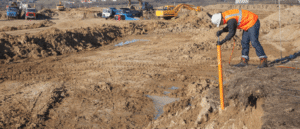
The past paper trained me to:
-
Interpret soil data correctly
-
Explain assumptions used in calculations
-
Link laboratory results to field behavior
-
Present step-by-step solutions clearly
How Did Practicing This Past Paper Improve My Understanding?
Did I struggle to connect theory with real ground conditions before? Absolutely. Practicing the past paper forced me to think like a practicing engineer rather than a memorizer of formulas.
It helped me:
-
Visualize soil behavior under loads
-
Improve technical explanations
-
Structure long answers logically
-
Gain confidence in numerical questions
Who Should Download the Geotechnical Engineering Exam Past Paper?
Am I a civil engineering, construction, or water engineering student? From my experience, this past paper is essential for anyone studying foundations, earthworks, or soil mechanics.
It is especially useful for:
-
University engineering students
-
Diploma and TVET learners
-
Candidates preparing for final exams
Why Is This Past Paper Important for Exam Success?
Have I ever understood the content but failed to answer questions clearly in exams? This past paper helped me understand what examiners expect in terms of depth, clarity, and structure.
What makes it valuable is:
-
Realistic exam-style questions
-
Balanced coverage of theory and application
-
Emphasis on engineering judgment
-
Improved exam confidence and speed
How Do I Personally Use This Past Paper During Revision?
Do I just skim through the questions? No. I attempt the paper under timed conditions, review my answers carefully, and then compare them with lecture notes and geotechnical standards.
This approach allows me to:
-
Identify weak topic areas
-
Refine my calculations and explanations
-
Improve technical writing
-
Build strong exam discipline
Where Can I Download the Geotechnical Engineering Exam Past Paper?
Whenever I want focused and practical revision, I download the Geotechnical Engineering exam past paper and use it as my primary study tool. It has helped me turn complex underground concepts into clear, exam-ready answers.
If I want to perform confidently in geotechnical engineering exams, practicing this past paper is a step I never skip.