
Differential Equations (DEs) are the language of change. Whether you are tracking the spread of a virus, the vibration of a bridge, or the cooling of a cup of coffee, DEs are how we model the real world. But for many students, the sheer variety of methods—from Separation of Variables to Laplace Transforms—can feel like a disorganized toolbox.
Below is the past paper download link:
Differential Equations Exam Past Paper
Above is the past paper download Link:
The secret to passing is recognizing the “type” of equation the moment you see it. A past paper acts as a diagnostic drill, training your eyes to spot the right technique before you even pick up your pen.
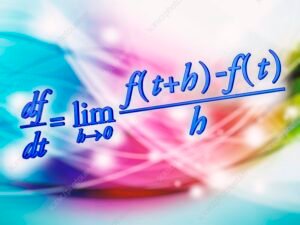
Your Questions Answered: Cracking Differential Equations
Q: Why is a past paper better than just doing textbook exercises?
A: Textbooks usually group problems by type (e.g., a whole chapter on First-Order Linear Equations). This gives you a “false sense of security” because you already know which method to use. In a real exam, the questions are mixed. By downloading a past paper, you practice the most vital skill: classification. You learn to distinguish a Bernoulli equation from an Exact equation when they are side-by-side.
Q: What are the “must-know” topics for a Differential Equations exam?
A: You can almost bet on seeing these four areas:
-
First-Order DEs: Integrating factors and separable equations are the foundation.
-
Second-Order Linear Equations: Mastering the auxiliary (characteristic) equation for both real and complex roots.
-
The Method of Undetermined Coefficients: Solving for the particular integral when the right-hand side is a polynomial, exponential, or sine/cosine function.
-
Laplace Transforms: Using tables to turn a differential equation into an algebraic one—a massive time-saver for initial value problems.
Q: How do I avoid “silly mistakes” in long calculations?
A: DEs are notorious for “sign errors,” especially when dealing with integration by parts or constant coefficients. Working through a past paper allows you to develop a verification habit. For example, you can practice quickly differentiating your answer to see if it satisfies the original equation. If it doesn’t, you know exactly where to look for the error.
Q: I struggle with “Application” or “Word Problems.” How do I prepare?
A: This is where past papers shine. Examiners love questions about population growth, mixing tanks, or spring-mass systems. These questions follow specific templates. By practicing with real exam versions, you learn how to translate a paragraph of text into a mathematical model $\frac{dy}{dx} = f(x, y)$ efficiently.
Take Control of Your Revision
Calculus is a skill, and like any skill, it requires high-stakes practice. Don’t wait until the night before the exam to find out you’ve forgotten how to handle a non-homogeneous equation. Use our resource to test yourself now.
[Click Here to Download the Differential Equations Exam Past Paper & Step-by-Step Solutions]
Quick Tip: Always check your boundary conditions twice. They are often the easiest marks to lose in a rush!